Puerto Rico
From damage assessments to resilient reconstruction, our team is supporting communities across the island with high-performance engineering and long-term recovery expertise.
Premier Structural Engineering Services in Puerto Rico
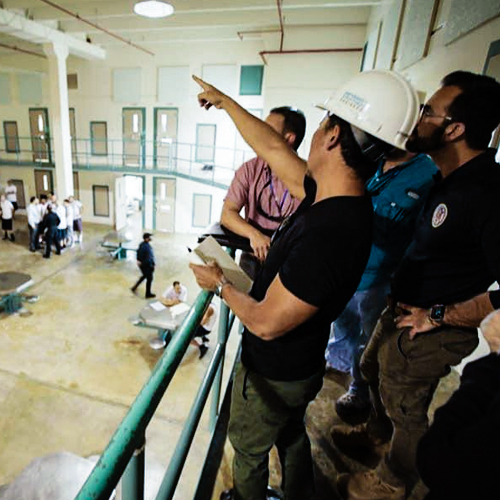
Since the 2020 earthquake sequence, Miyamoto International has been deeply engaged in Puerto Rico’s recovery and reconstruction. With a permanent office in Ponce and strong collaboration with local engineering partners, our team continues to provide expert structural assessments and resilient design solutions for schools, government facilities, correctional institutions, commercial buildings, and homes across the island.
These were the most damaging earthquakes Puerto Rico had experienced in over a century. In response, we partnered with communities, the private sector, and public agencies to deliver efficient, technically sound recovery strategies. Our approach prioritizes both immediate safety and long-term resilience.
Our Expertise
Angelita Lind Stadium
- Patillas, PR
The Angelita Lind Stadium is an important location for the municipality of Patillas. Meant for [..]
Archdiocese of San Juan
- San Juan, PR
In September 2017, Puerto Rico was struck by Hurricane Maria, a devastating category 4 hurricane [..]
Mario “Ñato” Ramírez Municipal Stadium
- Yauco, PR
Mario “Ñato” Ramirez Municipal Stadium, named after a local baseball hero who played six Major [..]
Building Disaster-Resilient Infrastructure in Puerto Rico
Our ongoing commitment extends beyond recovery. Together with Puerto Rican and international engineers, we are building local capacity in high-performance earthquake and disaster engineering—laying the foundation for a safer, stronger, and more economically secure future for the island.
At Miyamoto, our mission is clear: to protect lives and infrastructure in high-risk regions—and to support communities as they recover, rebuild, and thrive.
Puerto Rico Structural Engineering News
Stay connected with Miyamoto International’s latest Puerto Rico projects, engineering breakthroughs, and community initiatives.
We prioritize your data's security in our privacy policy
Latest News & Updates
Discover the latest structural engineering innovations, project milestones, and industry insights from Miyamoto International’s Puerto Rico team.
FAQs
Here are answers to the most common questions we receive about our structural engineering services in Puerto Rico. We cover topics from damage assessment and repairs to inspections and new construction projects across the island. If your question isn’t listed here, please contact us.
What specific types of engineering services does Miyamoto International provide in Puerto Rico?
Structural Engineering Our core expertise lies in providing world-class structural analysis and design for new construction. We excel at transforming complex challenges into elegant, resilient solutions, whether for a multi-level luxury residence like Casa Kutcher-Vazquez—requiring innovative designs for sloped terrain and complex foundations against severe wind and earthquake forces—or for high-rise structures like the upcoming 22-story luxury residential tower, Casa Candina.
Rehabilitation and Repair Engineering We lead comprehensive rehabilitation efforts for structures damaged by natural disasters. Our multidisciplinary team addresses all facets of repair, including electrical, civil, and structural components. A notable example is our work on the Angelita Lind Stadium, where we executed a complete design overhaul. This included replacing roofing, lighting, AC units, and acoustic ceilings, and tackling a particularly challenging full replacement of the electrical system to restore the facility to full function.
Damage Assessment and Mitigation Engineering In the aftermath of events like Hurricane Maria and the 2020 earthquake sequence, our engineers provide rapid and expert structural assessments for a wide range of facilities, including homes, schools, government buildings, and commercial properties. We develop and implement precise repair solutions, from epoxy injections for concrete walls to reinforced concrete jackets for columns, as demonstrated in our project at the Caribbean School Science Labs. For historic structures, we employ advanced methods like fiber-reinforced polymer to ensure repairs preserve essential architectural features.
Quality Control (QC) Inspections We provide rigorous structural quality control inspections to ensure projects meet the highest standards of safety and compliance. For clients like the US Army Corps of Engineers at the Aguadilla US Army Reserve Training Center, our inspections verify adherence to demanding seismic and wind load requirements. We also support local contractors by providing technical expertise, particularly when non-standard methods or materials are used, ensuring quality and resilience are built-in from the ground up.
Architectural and Engineering (A&E) Services Our team offers integrated Architectural and Engineering (A&E) services for complex repair and restoration projects. Following Hurricane Maria, we were entrusted by the Archdiocese of San Juan to lead the A&E services for the repair of 24 Catholic Houses of Worship and two radio stations, with the goal of meticulously restoring these vital community buildings to their pre-disaster condition.
What is Miyamoto International's primary mission and where do they operate globally?
Miyamoto International is a global structural engineering and disaster-risk reduction firm with a clear mission: to protect lives and impact economies through innovative engineering, providing resiliency expertise that sustains industries and safeguards communities worldwide. They have a vast global presence with over 30 worldwide locations. Their offices are strategically located across the United States (including California, Nevada, Arizona, and Washington D.C.), the Caribbean & Latin America (Puerto Rico, Mexico, Costa Rica, Colombia, Haiti), Europe, Middle East & Africa (Morocco, Italy, Ukraine, Turkey, Lebanon, Jordan, MENA), and Asia Pacific (Uzbekistan, Afghanistan, India, Nepal, Indonesia, Japan, New Zealand).
How has Miyamoto International been involved in Puerto Rico's disaster recovery efforts?
Miyamoto International has been deeply engaged in Puerto Rico’s recovery and reconstruction following significant natural disasters. They arrived in Puerto Rico shortly after the devastating magnitude 6.4 earthquake on January 7, 2020, and have since established a permanent office in Ponce. Their involvement includes providing expert structural assessments and resilient design solutions for a wide range of structures such as schools, government facilities, correctional institutions, commercial buildings, and homes across the island. They also supported recovery efforts after Hurricane Maria in 2017, demonstrating their commitment to both earthquake and hurricane resilience.
What types of damages did Miyamoto International address in Puerto Rico after the 2017 Hurricane Maria and 2020 earthquakes?
Following Hurricane Maria in 2017, Miyamoto International addressed widespread damage including paint and plaster damage, roof/ceiling damage, water damage, and cracks in walls, as seen in their work for the Archdiocese of San Juan. They also performed comprehensive rehabilitation on the Angelita Lind Stadium, replacing parts of the roof, lighting, AC units, acoustic ceilings, and the entire electrical system due to wind and rain damage. After the 2020 earthquake sequence, they observed and repaired damages such as cracks on reinforced concrete walls and columns in buildings like the Caribbean School science labs, often using epoxy injections and reinforced concrete jackets. The Mario “Ñato” Ramirez Municipal Stadium sustained damage from both Hurricane Maria and the 2020 earthquakes, including issues with its backstop padding, gym acoustic panel, roof structure, drain system, luminaires, digital scoreboard, and cracks throughout the main building.
Can you provide examples of specific projects Miyamoto International has undertaken in Puerto Rico?
Miyamoto International has been involved in numerous projects across Puerto Rico. Key examples include:
- Angelita Lind Stadium Rehabilitation in Patillas: A $4.5 million project to restore the stadium damaged by Hurricane Maria, involving a complete design overhaul.
- Archdiocese of San Juan Post-Hurricane Maria Repairs: Ongoing A&E services for 26 Catholic houses of worship, some historic, and two radio stations, with an estimated cost of $10 million.
- Caribbean School, Science Labs Structural Repairs in Ponce: Assessing and repairing structural damages from the 2020 earthquake, using epoxy injections and reinforced concrete jackets.
- Mario “Ñato” Ramírez Municipal Stadium Earthquake and Hurricane Damage Repairs in Yauco: A $1.8 million project to address combined hurricane and earthquake damage.
- Aguadilla US Army Reserve Training Center: Providing structural quality control inspections for wind- and seismic-resistant systems.
- Casa Kutcher-Vazquez in Humacao: Providing structural analysis and design for a multi-level luxury residence on a sloped, oceanfront terrain, addressing wind, hurricane, and seismic forces.
- Parroquia Nuestra Señora de la Merced in Ponce: Earthquake damage repairs on a historic parish, involving epoxy injections and fiber-reinforced polymer to preserve architectural features.
- Casa Candina in San Juan: Developing seismic designs for an upcoming 22-story luxury residential tower.
What unique challenges does construction and engineering face in Puerto Rico, and how does Miyamoto address them?
Puerto Rico faces significant challenges due to its susceptibility to both hurricanes and earthquakes. The island is located in a high seismic zone and is exposed to severe storms and hurricanes annually. Miyamoto International addresses these challenges by:
- Providing practical solutions for wind and earthquake forces in their designs, ensuring structural integrity even in complex projects like Casa Kutcher-Vazquez, which is built on a very sloped, oceanfront terrain.
- Employing specialized repair solutions for earthquake damage, such as epoxy injections for cracks on concrete walls and columns, and reinforced concrete jackets, as seen in the Caribbean School project.
- Adhering to and often exceeding seismic codes; recognizing that structures built prior to the 1987 seismic code adoption are particularly vulnerable.
- Working closely with local contractors and engineers to bridge the gap between US designers and local market methods, ensuring construction meets specified structural requirements, as demonstrated in the Aguadilla US Army Reserve Training Center project, which incorporated new materials like Insulated Concrete Form (ICF) walls.
- Prioritizing long-term resilience and building local capacity in high-performance earthquake and disaster engineering.
Contact.
Whether it’s to talk about high-performance structural engineering, minimizing business interruption after an earthquake, project management or disaster response — or you want to join our mission of making the world a better place – we would love to hear from you.
Puerto Rico
#33 Calle Castillo Ponce,
Puerto Rico, 00730